
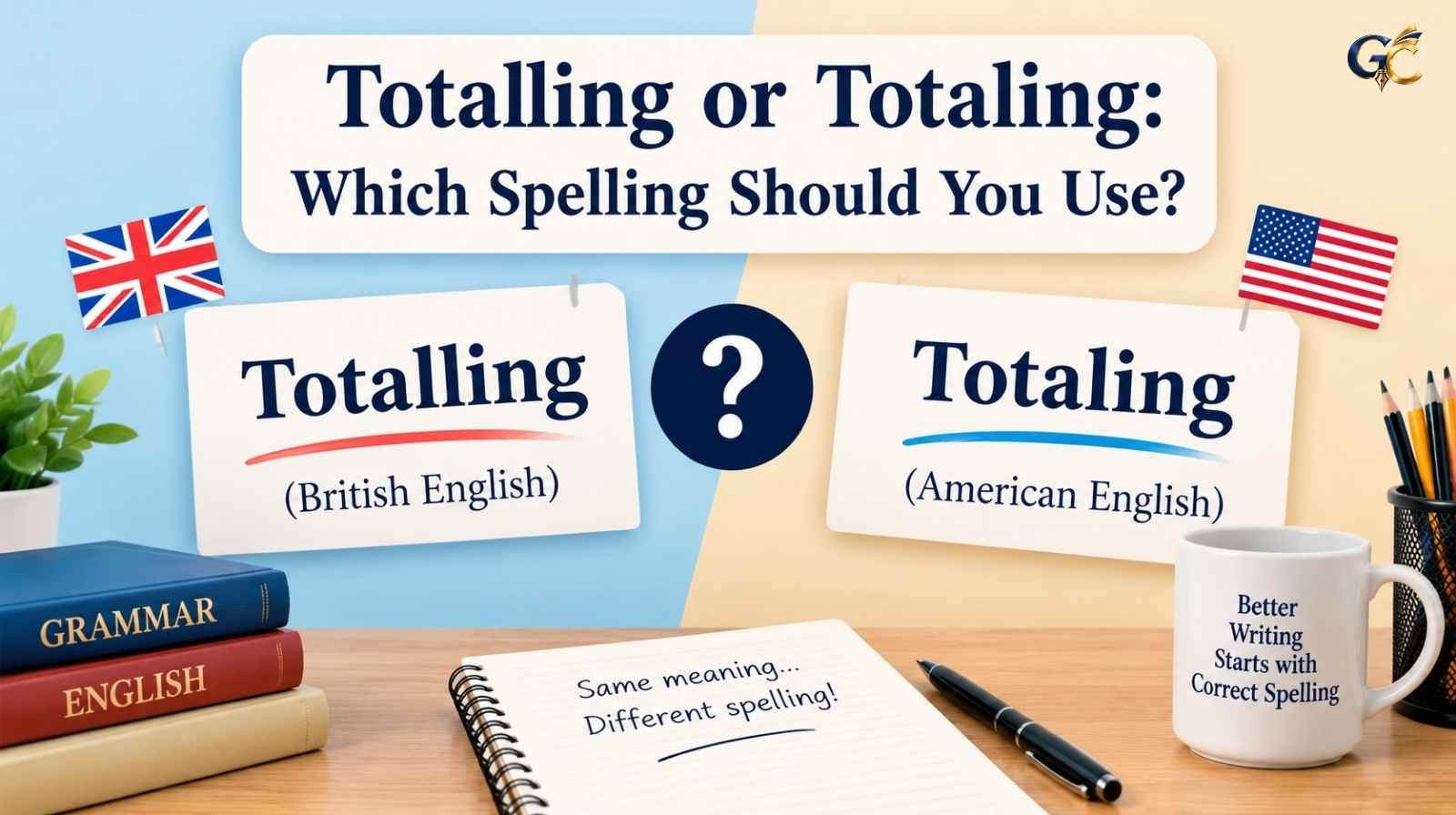
Have you ever wondered whether to write totalling or totaling? You may have seen both spellings in books, business reports, school assignments, and online articles. So, which one is correct?
The good news is that both totalling and totaling are correct spellings. The main difference is the type of English you are using. Totalling is commonly used in British English, while totaling is the standard spelling in American English. Both words have the same meaning: adding numbers or amounts together to calculate a final figure.
In this guide, you will learn the difference between totalling and totaling, understand when to use each spelling, and discover practical examples that will help you write with confidence.
Totalling or Totaling: What Is the Difference?
The difference between totalling and totaling is regional spelling, not meaning. Both words are forms of the verb total, which means to add figures together or reach a particular amount.
When to Use Totalling
Use totalling when following British English spelling conventions. It is commonly used in the United Kingdom and in writing that follows British spelling standards.
Examples:
- The expenses are totalling £500 this month.
- She is totalling the scores before announcing the winner.
- The donations are totalling more than £10,000.
- We spent the afternoon totalling the company’s expenses.
In each example, totalling describes adding amounts or reaching a combined figure.
When to Use Totaling
Use totaling when following American English spelling conventions. It is the preferred form in most US English writing, including business documents, academic assignments, and everyday communication.
Examples:
- The expenses are totaling $500 this month.
- She is totaling the scores before announcing the winner.
- The donations are totaling more than $10,000.
- We are totaling the company’s expenses before preparing the report.
Notice that the meaning remains exactly the same. Only the spelling changes.
Quick Comparison Table
| Feature | Totalling | Totaling |
|---|---|---|
| Preferred variety | British English | American English |
| Number of letters “l” before “ing” | Two | One |
| Meaning | Adding or reaching a total | Adding or reaching a total |
| Example | Totalling £200 | Totaling $200 |
| Correct spelling? | Yes | Yes |
Oxford’s dictionary entries recognize both forms and identify totaling as the American English form. See the Oxford Advanced Learner’s Dictionary for the verb’s definition and usage.
What Does Totalling or Totaling Mean?
Both spellings describe the process of adding amounts together or arriving at a combined figure. The word can function as a present participle in a verb phrase or as a gerund when the action is treated as a noun.
Totalling and Totaling as Verbs
When used as part of a verb phrase, these words describe an action that is happening or continuing.
Examples:
- The accountant is totalling the invoices. (British English)
- The accountant is totaling the invoices. (American English)
- The repair costs are totalling £2,000. (British English)
- The repair costs are totaling $2,000. (American English)
The spelling depends on the variety of English being followed.
Totalling and Totaling as Gerunds
A gerund is a verb form ending in -ing that functions as a noun.
Examples:
- Totalling the expenses takes time.
- Totaling the scores is part of the final review.
- She enjoys totalling the figures manually.
- He finished totaling the sales before lunch.
In these examples, the word refers to the activity of calculating or adding figures.
Can Totaling Have Another Meaning?
Yes. In informal North American English, totaling can also describe damaging a vehicle so severely that it is considered a total loss.
For example:
- The accident ended up totaling his car.
- The insurance company declared that the vehicle had been totaled.
In British English, the corresponding forms are generally totalling and totalled. Context makes the intended meaning clear.
Why Do British and American English Spell Totalling Differently?
British and American English often differ in how they form words by adding suffixes. One common difference involves whether the final consonant is doubled before adding -ing or -ed.
The British English Spelling Pattern
British English commonly doubles the final l in words such as travel, cancel, and total when adding certain suffixes.
Examples:
- Total → totalling
- Travel → travelling
- Cancel → cancelling
- Label → labelling
These spellings are common in British English publications and formal writing.
The American English Spelling Pattern
American English often uses a single l in comparable forms.
Examples:
- Total → totaling
- Travel → traveling
- Cancel → canceling
- Label → labeling
There are exceptions to English spelling patterns, so it is wise to check a dictionary when you are unsure.
How to Choose the Right Spelling
Follow these simple steps:
- Identify your audience. Are you writing primarily for American or British readers?
- Choose a spelling convention. Use American English for a US audience and British English for a UK audience.
- Apply the convention consistently. Avoid switching between forms in the same article or document.
- Check your preferred style guide or dictionary when necessary.
For example, if you are preparing a report for a US company, write totaling. If you are preparing a report for a UK company, write totalling.

Real-Life Example: Using Totalling and Totaling at Work
Imagine that two accountants work for international branches of the same company. Both need to calculate monthly expenses, prepare reports, and present the final figures to their managers.
The first accountant works in London and follows British English conventions. She writes, “The department’s expenses are totalling £8,500 this month.” Later, she prepares another sentence: “Totalling the receipts before submitting the report helps prevent errors.”
The second accountant works in New York and follows American English conventions. He writes, “The department’s expenses are totaling $8,500 this month.” In his report, he also writes, “Totaling the receipts before submitting the report helps prevent errors.”
Neither accountant has made a spelling mistake. They are simply following different regional standards.
Now imagine that the company combines both reports into a single document for international management. The editors must decide whether the final document will follow British or American English. If they choose American English, they should use totaling, traveling, and labeled where appropriate. If they choose British English, they should use totalling, travelling, and labelled.
This example shows why spelling consistency matters in professional writing. Although both forms are correct, using one style throughout a document makes the content easier to read and gives it a more polished appearance.
The same principle applies to school essays, blog posts, financial summaries, invoices, and business emails. Choose the spelling that matches your audience, then use it consistently.
Totalling or Totaling: What Do Dictionaries and Recent Guidance Tell Us?
Oxford’s dictionary entry for total lists totalling as the regular -ing form and identifies totaling as the US English alternative. Its American English entry also confirms that totaling is the usual US form. These are established spelling conventions rather than a new change in English.
Sources:
- Oxford Advanced Learner’s Dictionary: Total
- Oxford Advanced American Dictionary: Total
What 2025–2026 SEO Guidance Means for Grammar Articles
There is no verified, authoritative 2025–2026 statistic in the sources consulted that establishes the exact number of people searching for totalling versus totaling. Therefore, it would be misleading to invent a search-volume figure or claim that one spelling receives more searches.
However, Google’s published guidance emphasizes creating helpful, reliable, people-first content and using clear, descriptive titles. For a spelling article, this means answering the reader’s question directly, providing accurate examples, and citing trustworthy references.
Read Google’s guidance here: Creating Helpful, Reliable, People-First Content.
For Grammarclear, the practical takeaway is to prioritize accurate explanations, useful examples, and consistent spelling rather than repeating the keyword unnecessarily. These practices support a better reader experience, although they cannot guarantee a particular search ranking.
FAQs
Q1: Is totalling or totaling correct?
A: Both are correct. Totalling is the standard British English spelling, while totaling is the standard American English spelling.
Q2: Is totaling American or British English?
A: Totaling is primarily the American English spelling. It is commonly used in US writing, including business reports, academic papers, and everyday communication.
Q3: Is totalling British English?
A: Yes. Totalling is the usual British English spelling. It follows the convention of doubling the final l before adding -ing.
Q4: What is the past tense of total?
A: The past tense is generally totaled in American English and totalled in British English.
Examples:
- American English: The expenses totaled $500.
- British English: The expenses totalled £500.
Q5: Why does British English use two Ls in totalling?
A: British English commonly doubles the final l in words such as total when adding suffixes like -ing and -ed. American English often uses one l in these forms.
Q6: Should I use totaling in a US business report?
A: Yes. Totaling is the preferred spelling for a report written in American English. Use the same spelling convention throughout the document.
Q7: Do totalling and totaling mean the same thing?
A: Yes. Both refer to adding figures together or reaching a combined amount. The difference is regional spelling, not meaning.
Q8: How can I remember which spelling to use?
A: Remember this simple rule: one L for American English, two Ls for British English in totaling and totalling. When writing for a particular organization, follow its preferred style guide.
Conclusion:
The choice between totalling or totaling depends on the variety of English you are using. Both spellings are correct, and both describe adding amounts together or reaching a final figure.
Use totaling for American English and totalling for British English. If you are writing a school assignment, professional report, blog post, or business email, choose the form that matches your audience and use it consistently.
Understanding this small spelling difference can help you write more clearly and avoid unnecessary editing mistakes.
👉 Discover more simple and practical grammar guides on Grammar Clear

Zia Ahmad is the founder of GrammarClear, an educational platform dedicated to making English grammar simple and easy to understand. Through clear explanations and practical examples, he aims to help learners improve their grammar, writing, and communication skills with confidence.

